MyMoney.my.id
  • Home
  • Ask and Answer
  • Psychological
  • Export import
  • About Us
    • Contact
    • Privacy Policy
Search
  • Contact
  • Blog
  • Complaint
  • Advertise
© 2023 MyMoney.my.id. All Rights Reserved.
Reading: What is a Brownfield Investment? Advantages and Risks and How to Avoid Them
Share
Sign In
Notification Show More
Latest News
How will the Layaway plan benefit retailers and customers?
Ask and Answer
Forbes’ 5 Best Crypto Exchanges
Psychological
Employee Stock Option Program (ESOP)
Ask and Answer
The Definition and Process of the Accounting Cycle: Understanding the Phases and Their Benefits for the Company
Ask and Answer
Dividend Reinvestment Plan (DRIP): Compound interest program on stock investment
Ask and Answer
Aa
MyMoney.my.id
Aa
  • Home
  • Ask and Answer
  • Psychological
  • Export import
  • About Us
Search
  • Home
  • Ask and Answer
  • Psychological
  • Export import
  • About Us
    • Contact
    • Privacy Policy
Have an existing account? Sign In
Follow US
  • Contact
  • Blog
  • Complaint
  • Advertise
© 2022 Foxiz News Network. Ruby Design Company. All Rights Reserved.
MyMoney.my.id > Blog > Ask and Answer > What is a Brownfield Investment? Advantages and Risks and How to Avoid Them
Ask and Answer

What is a Brownfield Investment? Advantages and Risks and How to Avoid Them

admin
Last updated: 2023/08/31 at 7:03 AM
admin
Share
SHARE

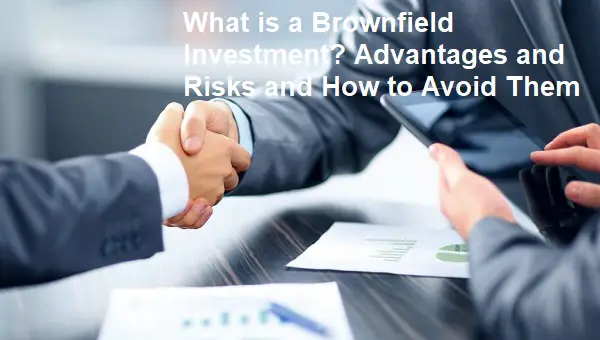
Brownfield investment is one type of investment that is often made by companies or investors. Brownfield investment is an investment made in a project or business that already exists and has been in operation before. For example, when a company buys an existing factory, then renovates it to increase efficiency or increase productivity.
Why is this topic important to know? Because brownfield investment can be a profitable choice for companies or investors who want to expand their business. However, brownfield investment can also be riskier because it is necessary to evaluate the physical and financial condition of the pre-existing business. Therefore, it is important for companies or investors to understand what a brownfield investment is and the risks that may occur, so as to minimize risks and maximize returns.

The purpose of this article is to provide an overview of what a brownfield investment is, as well as provide information about the benefits and risks that may occur in a brownfield investment. Apart from that, this article will also provide some suggestions for minimizing the risk of brownfield investment.

What is Brownfield Investment?

Brownfield investment is an investment made in a project or business that already exists and has been in operation before. The term brownfield is usually used to refer to projects or businesses that already have infrastructure and facilities built, such as factories, warehouses, or distribution centers.

For example, when a company buys an existing factory, then renovates or repairs existing facilities to increase efficiency or increase productivity. Brownfield investment can also occur when a company or investor buys land that has been contaminated, then cleans and reclaims it for reuse.

Brownfield investment can be a profitable choice for companies or investors because the costs that must be incurred to build new infrastructure and facilities can be avoided. However, brownfield investment can also be riskier because it is necessary to evaluate the physical and financial condition of the pre-existing business, as well as to pay attention to the risks related to environmental problems that may have occurred at the location.

Brownfield Investment Profits and Risks

One of the advantages of brownfield investment is that costs incurred to build new infrastructure and facilities can be avoided. In addition, the development process can also be faster because there is no need to build infrastructure and facilities from scratch. Brownfield investment can also be a profitable option for companies or investors who want to expand their business by using existing facilities.

However, brownfield investment can also be riskier because it is necessary to evaluate the physical and financial condition of the pre-existing business. In addition, it is necessary to pay attention to risks related to environmental problems that may have occurred at the location, such as contamination by chemicals or water pollution. These risks need to be avoided so that brownfield investments can run smoothly and profitably.

How to Avoid Brownfield Investment Risk?

To avoid brownfield investment risks, there are several steps that need to be taken before making an investment:

1. Evaluation of the physical and financial condition of an existing business

This is an important step to find out the actual condition of the project or business to be purchased. It is necessary to carry out an audit of the existing financial and physical business to find out the weaknesses that might occur and the costs that must be spent on repairs.

2. Check for environmental problems that may occur

Brownfield investments can be riskier due to environmental problems that may have occurred at the site. It is necessary to check whether the location is contaminated by chemicals or water pollution, and the costs that must be incurred for cleaning and reclamation.

3. Make improvement and development plans

After knowing the physical and financial condition of an existing business, as well as environmental problems that may occur, it is necessary to make an appropriate improvement and development plan to avoid brownfield investment risks. This plan should take into account the costs to be incurred for repairs and cleaning, and identify the resources needed to carry out the project.

4. Prepare the necessary documents

To avoid brownfield investment risk, it is necessary to prepare the necessary documents such as sale and purchase agreements, environmental documents, and others. These documents will help guarantee investment security and provide legal certainty for companies or investors making investments.

5. Pay attention to the applicable regulations

Brownfield investments also need to pay attention to regulations in force in the country or region where the project or business operates. It is necessary to understand and follow regulations related to environmental issues, investments, and others to avoid brownfield investment risks.

By carrying out these steps, companies or investors can minimize brownfield investment risks and maximize profits. Also, keep in mind that brownfield investments are not always risky, depending on the physical and financial condition of the existing business, as well as environmental problems that may occur in the location. Therefore, it is important to carry out a proper evaluation before making a brownfield investment.

Conclusion

After studying what brownfield investment is and the benefits and risks that may occur, as well as how to avoid brownfield investment risks, it can be concluded that brownfield investment is a profitable choice for companies or investors who want to expand their business. However, brownfield investment can also be riskier because it is necessary to evaluate the physical and financial condition of the pre-existing business, as well as to pay attention to the risks related to environmental problems that may have occurred at the location.

Therefore, it is important for companies or investors to understand what brownfield investment is and the risks that may occur, and to take the necessary steps to avoid brownfield investment risks. Thus, brownfield investment can run smoothly and profitably for the companies or investors who do it.

You Might Also Like

How will the Layaway plan benefit retailers and customers?

Employee Stock Option Program (ESOP)

The Definition and Process of the Accounting Cycle: Understanding the Phases and Their Benefits for the Company

Dividend Reinvestment Plan (DRIP): Compound interest program on stock investment

Lock Up: Definition and Benefits for Companies

Sign Up For Daily Newsletter

Be keep up! Get the latest breaking news delivered straight to your inbox.
By signing up, you agree to our Terms of Use and acknowledge the data practices in our Privacy Policy. You may unsubscribe at any time.
admin
Share this Article
Facebook Twitter Copy Link Print
Previous Article It used to be worth $ 0, this is how the price of Bitcoin changes from year to year
Next Article Tax Control Framework (TCF)
Leave a comment

Leave a Reply Cancel reply

Your email address will not be published. Required fields are marked *

Stay Connected

248.1k Like
69.1k Follow
134k Pin
54.3k Follow

Latest News

  • How to deal with blank futures of targets in forex trading?

    How to deal with blank futures of targets in forex trading?

  • Definition of Overbought and Oversold

    Definition of Overbought and Oversold

  • What are International Money Orders?

    What are International Money Orders?

  • InsurTech: Forms of Technology Implementation in the Insurance Industry

    InsurTech: Forms of Technology Implementation in the Insurance Industry

  • Top 5 Best Investment Banks Based on Revenue

    Top 5 Best Investment Banks Based on Revenue

Recent Posts

  • Days Sales Outstanding (DSO)

    Days Sales Outstanding (DSO)

    Days Sales Outstanding is the number of days needed by the company to collect revenue from the sales process. Okay, for example like this, there is a company that produces …
  • The difference between Mirror trading and copy trading

    The difference between Mirror trading and copy trading

    Mirror trading is a strategy of copying all the trades of an experienced forex investor algorithmically. Mirror trading was initially available to institutional clients but over time it began to …
  • Dividend Reinvestment Plan (DRIP): Compound interest program on stock investment

    Dividend Reinvestment Plan (DRIP): Compound interest program on stock investment

    Dividends are profits generated from investing in stocks. Dividends are part of the company’s profits distributed to investors. Dividend distribution is generally carried out in cash, but under certain conditions, …
  • Where are the capital market predators hiding?

    Where are the capital market predators hiding?

    What are capital market predators? Capital market predators are parties that try to harm a number of naive investors. The capital market should ideally be a place for investors, both …
  • What are Endowments?

    What are Endowments?

    Endowment is a type of life insurance that has two benefits at once, therefore it is also known as endowment insurance. This type of insurance is indeed similar to unit …
  • Which is better, Centralized or Decentralized Financial System?

    Which is better, Centralized or Decentralized Financial System?

    What is the Financial System? The system in language has the meaning as a series consisting of various kinds of elements that are interconnected to facilitate the flow of information, …
  • How to analyze the fundamentals of insurance companies

    How to analyze the fundamentals of insurance companies

    Warren Buffett is one of the most successful investors of all time and one of his favorite sectors of stocks is insurance companies. The reason is simple, as long as …
  • Get to know the General Ledger: How it Works and Benefits in Managing Company Finances

    Get to know the General Ledger: How it Works and Benefits in Managing Company Finances

    General Ledger is an important part of the company’s financial system. Through General Ledger, companies can record and manage all financial transactions that occur, from receiving money to spending money. …
  • How to avoid partnership trap condition

    How to avoid partnership trap condition

    Partnership trap is a condition when a party (individual or company) enters into a partnership with another party and has been legally ratified complete with various clauses and agreements but …
  • Overview: These 5 Companies Set the Biggest IPO Records of All Time

    Overview: These 5 Companies Set the Biggest IPO Records of All Time

    Top 5 Companies with the Biggest IPOs of All Time Initial Public Offering (IPO) is known as a way for companies to get an injection of fresh funds as additional …
  • What is the FOMC (Federal Open Market Committee)?

    What is the FOMC (Federal Open Market Committee)?

    The FOMC (Federal Open Market Committee) is the board in charge of monetary policy in the United States. The FOMC is one of the 3 main entities of the Federal …
  • Market Anomalies: Definition, Causes and Examples

    Market Anomalies: Definition, Causes and Examples

    Market anomalies are understood as unusual conditions in financial markets. There are various causes, including geopolitical events, central bank intervention, changes in a country’s interest rates and so on. Knowing …
  • Tax Control Framework (TCF)

    Tax Control Framework (TCF)

    The Tax Control Framework is a concept that is integrated with good corporate governance or good corporate governance. The tax control framework, or commonly abbreviated as TCF, is a framework …
  • Why are there more forex brokers than stock brokers?

    Why are there more forex brokers than stock brokers?

    This has a lot to do with the leverage offered by forex brokers. In stock trading, stock brokers do not offer large leverage, although they provide a margin account that …
  • Cash Flow and Interest, What’s the Difference?

    Cash Flow and Interest, What’s the Difference?

    If you look at the mechanism or workings of cash flow and interest, it seems that both are the same. In the cash flow there is money received by the …

Most Viewed Posts

  • Currency War, What Is It? (1,007,858)
  • Oligopsony: Resulting Implications and Possible Solutions (1,007,821)
  • Days Sales Outstanding (DSO) (1,007,820)
  • Critical Mass in Business: Recognizing the Concept, Influencing Factors, and How to Achieve It (1,007,793)
  • Getting to Know the Contagion Effect and Efforts to Handle it in the Economic Sector (934,801)
Follow US

© 2025 MyMoney.my.id. All Rights Reserved.

Removed from reading list

Undo
Welcome Back!

Sign in to your account

Lost your password?