MyMoney.my.id
  • Home
  • Ask and Answer
  • Psychological
  • Export import
  • About Us
    • Contact
    • Privacy Policy
Search
  • Contact
  • Blog
  • Complaint
  • Advertise
© 2023 MyMoney.my.id. All Rights Reserved.
Reading: What is the FOMC (Federal Open Market Committee)?
Share
Sign In
Notification Show More
Latest News
How will the Layaway plan benefit retailers and customers?
Ask and Answer
Forbes’ 5 Best Crypto Exchanges
Psychological
Employee Stock Option Program (ESOP)
Ask and Answer
The Definition and Process of the Accounting Cycle: Understanding the Phases and Their Benefits for the Company
Ask and Answer
Dividend Reinvestment Plan (DRIP): Compound interest program on stock investment
Ask and Answer
Aa
MyMoney.my.id
Aa
  • Home
  • Ask and Answer
  • Psychological
  • Export import
  • About Us
Search
  • Home
  • Ask and Answer
  • Psychological
  • Export import
  • About Us
    • Contact
    • Privacy Policy
Have an existing account? Sign In
Follow US
  • Contact
  • Blog
  • Complaint
  • Advertise
© 2022 Foxiz News Network. Ruby Design Company. All Rights Reserved.
MyMoney.my.id > Blog > Ask and Answer > What is the FOMC (Federal Open Market Committee)?
Ask and Answer

What is the FOMC (Federal Open Market Committee)?

admin
Last updated: 2024/03/19 at 12:45 AM
admin
Share
SHARE

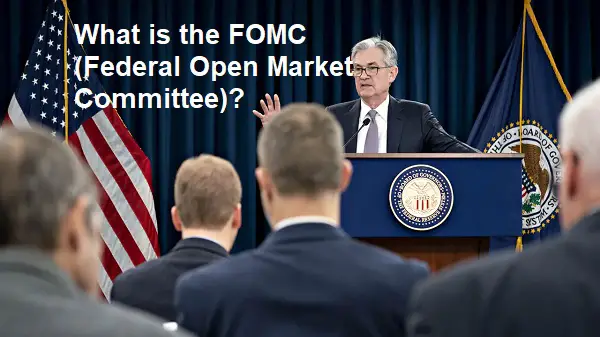
The FOMC (Federal Open Market Committee) is the board in charge of monetary policy in the United States. The FOMC is one of the 3 main entities of the Federal Reserve or The Fed. The remaining two are the board of governors which is the most important entity as well as the 12 federal reserve regional banks.

The FOMC consists of 12 members consisting of 7 members of the Board of Governors of the US Federal Reserve and 5 presidents of regional Federal Reserve banks. The Board of Governors of the Bank consists of 7 people who are elected by the US President and confirmed by the US Senate. They were then appointed for a 14-year term, which was meant to guarantee the FOMC’s independence from political pressure.

The bank presidents of the regional Federal Reserve banks are elected by the bank’s board of directors for a term of 1 year. They can only be appointed once during their tenure as the president’s banker. FOMC members must be appointed by the Board of Governors of the US Federal Reserve to become members of the FOMC.

Each January, one of the banker presidents of each Federal Reserve regional bank rotates as chair of the FOMC for 1 year. The FOMC Chair is the most senior member of the FOMC and is responsible for managing FOMC meetings and issuing monetary policy statements after the meetings. Currently, Jerome Powell, the US Federal Reserve Board of Governors, is the chair of the FOMC.

FOMC tasks

In general, the FOMC has the task of managing monetary policy in the United States. The goal is to maintain price stability and keep unemployment low.

However, in more detail, the main tasks of the FOMC are as follows:

1. Set Interest Rates

The FOMC is tasked with setting the Fed’s interest rate which is the reference in determining lending, deposit and investment rates. Through these instruments, the FOMC tries to influence economic growth and inflation in the US economy.

2. Managing Cash Reserves

The FOMC is also tasked with managing US dollar reserves in circulation, in order to control the inflation rate so that it remains stable. The FOMC does this by buying or selling securities on the open market.

3. Issuing a Monetary Policy Statement

After each meeting, the FOMC issues a monetary policy statement outlining the future monetary policy objectives and how the FOMC will achieve them. It helps investors and economic policy makers to understand ongoing and future monetary policies.

4. Issuing Economic Projections

The FOMC also issues economic projections that provide views on how the FOMC sees the future state of the economy. It helps investors and economic policy makers to understand how the FOMC sees the future of the economy and how the ongoing monetary policy will affect the economy.

5. Maintain Public Trust

The FOMC is also responsible for maintaining public confidence in the financial system and the US Central Bank. This is especially important because the US Federal Reserve has a key role in managing a possible financial crisis.

Main Purpose of the FOMC

The main goal of the FOMC is to maintain price stability, which means maintaining a healthy inflation rate and maintaining a low unemployment rate. An inflation rate that is too high can undermine the purchasing power of money and reduce public confidence in the currency. Unemployment rates that are too high can reduce productivity and increase poverty rates.

Basically every country wants its economy to grow stably without any problems, including the US. However, it is impossible to eliminate those problems that naturally arise, such as inflation, unemployment and so on. Therefore the US government formed The Fed with FOMC entities in it, as an effort to maintain economic stability from a monetary perspective.

The FOMC’s monetary policy is very important because it can affect the inflation rate, interest rates, and the strength of the US dollar. Weak monetary policy can lead to high inflation, while tight monetary policy can suppress economic growth. The FOMC continues to monitor the economy and adjust monetary policy according to changing conditions.

In addition to managing money and interest rates, the FOMC is also responsible for managing the US foreign exchange reserves. Foreign exchange reserves are a number of foreign currencies managed by the Federal Reserve to affect the exchange rate of the US dollar against other foreign currencies. The FOMC can increase or decrease the amount of foreign exchange reserves to affect the US dollar exchange rate. Overall, the FOMC is responsible for monetary policy that can affect the US economy at large. Appropriate monetary policy can help maintain healthy economic growth, control inflation, and maintain stability in the US dollar exchange rate.

Indicators that can show FOMC decisions and their impact on the economy are interest rates, inflation, the US dollar exchange rate, stock price index, and the unemployment rate. The interest rate managed by the FOMC can affect demand for credit and economic growth, while the inflation rate managed by the FOMC can affect people’s purchasing power.

The US dollar exchange rate can also be influenced by the FOMC through the management of its foreign exchange reserves, while the stock price index can be affected by the FOMC’s decisions regarding interest rates. The unemployment rate can also be influenced by the FOMC’s monetary policy, whereby a low unemployment rate can indicate healthy economic growth.

Conclusion

The FOMC is part of The Fed, the US central bank. The council has the task of formulating US monetary policy to achieve the goal of building monetary stability. Members of the FOMC make up the combined board of governors and several regional federal reverse bank presidents.

The FOMC is an important entity, not only in the US economy, but for investors and financial market participants in general. This is because FOMC policies often indicate the direction of developments in the global economy, so that the impact caused can be very significant to changes in market prices. Therefore, news and issues related to the FOMC cannot be ignored.


You Might Also Like

How will the Layaway plan benefit retailers and customers?

Employee Stock Option Program (ESOP)

The Definition and Process of the Accounting Cycle: Understanding the Phases and Their Benefits for the Company

Dividend Reinvestment Plan (DRIP): Compound interest program on stock investment

Lock Up: Definition and Benefits for Companies

Sign Up For Daily Newsletter

Be keep up! Get the latest breaking news delivered straight to your inbox.
By signing up, you agree to our Terms of Use and acknowledge the data practices in our Privacy Policy. You may unsubscribe at any time.
admin
Share this Article
Facebook Twitter Copy Link Print
Previous Article Definition of Overbought and Oversold
Next Article How the Business Exit Strategy Works
Leave a comment

Leave a Reply Cancel reply

Your email address will not be published. Required fields are marked *

Stay Connected

248.1k Like
69.1k Follow
134k Pin
54.3k Follow

Latest News

  • What is a Brownfield Investment? Advantages and Risks and How to Avoid Them

    What is a Brownfield Investment? Advantages and Risks and How to Avoid Them

  • Brand Awareness: Definition, Benefits, How to Build, and The Indicators

    Brand Awareness: Definition, Benefits, How to Build, and The Indicators

  • Why are there more forex brokers than stock brokers?

    Why are there more forex brokers than stock brokers?

  • Force Majeure: The Concept and Its Impact on Contracts

    Force Majeure: The Concept and Its Impact on Contracts

  • 5 Countries with the Highest Debt to GDP Ratio

    5 Countries with the Highest Debt to GDP Ratio

Recent Posts

  • 10 Largest Stock Exchanges Based on Market Capitalization

    10 Largest Stock Exchanges Based on Market Capitalization

    The stock exchange is the center for trading stocks and other types of securities. The stock exchange is a place that brings together buyers and sellers of securities. As well …
  • Where Does Our Money Go When We Have Got Margin Call

    Where Does Our Money Go When We Have Got Margin Call

    What are Margin Calls? Margin Call is a warning that equity or capital is barely sufficient margin required to maintain open transactions. Therefore, a margin call is basically a warning …
  • Tax Control Framework (TCF)

    Tax Control Framework (TCF)

    The Tax Control Framework is a concept that is integrated with good corporate governance or good corporate governance. The tax control framework, or commonly abbreviated as TCF, is a framework …
  • The difference between Mirror trading and copy trading

    The difference between Mirror trading and copy trading

    Mirror trading is a strategy of copying all the trades of an experienced forex investor algorithmically. Mirror trading was initially available to institutional clients but over time it began to …
  • Asset Revaluation and its Benefits for the Company

    Asset Revaluation and its Benefits for the Company

    Fixed assets have a dynamic value or change over time. Some assets have a value that tends to decrease from their value when they were first acquired. But, some others …
  • What is meant by price discovery?

    What is meant by price discovery?

    Price discovery is a process for determining an appropriate price for an asset, security, commodity to currency. Price discovery occurs when sellers and buyers interact with each other to bid …
  • How to analyze the fundamentals of insurance companies

    How to analyze the fundamentals of insurance companies

    Warren Buffett is one of the most successful investors of all time and one of his favorite sectors of stocks is insurance companies. The reason is simple, as long as …
  • What is meant by Economic Recovery?

    What is meant by Economic Recovery?

    Economic recovery is the process of recovering or improving a country’s economic condition after experiencing a crisis or downturn triggered by various things, such as economic crises, natural disasters, wars …
  • Hustler, Hacker and Hipster in the Startup World

    Hustler, Hacker and Hipster in the Startup World

    When technology is developing rapidly like today, especially for digital technology, many startup companies have emerged with various innovations that they bring. Starting from fintech companies engaged in financial services …
  • Top 5 Best Investment Banks Based on Revenue

    Top 5 Best Investment Banks Based on Revenue

    Overview of Investment Bank An investment bank is a banking entity that acts as a party that collects and distributes capital to companies, government agencies and the government itself. The …
  • What is Interest Bearing Debt to Equity?

    What is Interest Bearing Debt to Equity?

    The interest bearing debt to equity ratio is the ratio that shows how much interest-bearing debt the company holds compared to its equity. The higher this ratio, the higher the …
  • Cash Flow and Interest, What’s the Difference?

    Cash Flow and Interest, What’s the Difference?

    If you look at the mechanism or workings of cash flow and interest, it seems that both are the same. In the cash flow there is money received by the …
  • Who Makes Transactions in the Forex Market?

    Who Makes Transactions in the Forex Market?

    Foreign Exchange (Forex) or foreign exchange (forex) has a dynamic value. Even price changes in the forex market can occur significantly in a short time. For example, when the release …
  • Sidechain: Definition, Functions, and Weaknesses

    Sidechain: Definition, Functions, and Weaknesses

    Blockchain is a digital database where cryptocurrencies are transacted. Blockchain has network nodes that act as validators while maintaining the security of the blockchain network from hacking. In a crypto …
  • Green Accounting: Preserving the Environment to Maintain Business Continuity

    Green Accounting: Preserving the Environment to Maintain Business Continuity

    The term green accounting may not be widely heard and not quite as popular as traditional accounting concepts. However, in recent years, green accounting has received a lot of attention …

Most Viewed Posts

  • Days Sales Outstanding (DSO) (981,564)
  • Currency War, What Is It? (981,510)
  • Oligopsony: Resulting Implications and Possible Solutions (981,499)
  • Critical Mass in Business: Recognizing the Concept, Influencing Factors, and How to Achieve It (981,146)
  • Getting to Know the Contagion Effect and Efforts to Handle it in the Economic Sector (910,929)
Follow US

© 2025 MyMoney.my.id. All Rights Reserved.

Removed from reading list

Undo
Welcome Back!

Sign in to your account

Lost your password?