MyMoney.my.id
  • Home
  • Ask and Answer
  • Psychological
  • Export import
  • About Us
    • Contact
    • Privacy Policy
Search
  • Contact
  • Blog
  • Complaint
  • Advertise
© 2023 MyMoney.my.id. All Rights Reserved.
Reading: Currency War, What Is It?
Share
Sign In
Notification Show More
Latest News
How will the Layaway plan benefit retailers and customers?
Ask and Answer
Forbes’ 5 Best Crypto Exchanges
Psychological
Employee Stock Option Program (ESOP)
Ask and Answer
The Definition and Process of the Accounting Cycle: Understanding the Phases and Their Benefits for the Company
Ask and Answer
Dividend Reinvestment Plan (DRIP): Compound interest program on stock investment
Ask and Answer
Aa
MyMoney.my.id
Aa
  • Home
  • Ask and Answer
  • Psychological
  • Export import
  • About Us
Search
  • Home
  • Ask and Answer
  • Psychological
  • Export import
  • About Us
    • Contact
    • Privacy Policy
Have an existing account? Sign In
Follow US
  • Contact
  • Blog
  • Complaint
  • Advertise
© 2022 Foxiz News Network. Ruby Design Company. All Rights Reserved.
MyMoney.my.id > Blog > Ask and Answer > Currency War, What Is It?
Ask and Answer

Currency War, What Is It?

admin
Last updated: 2023/05/25 at 1:57 AM
admin
Share
SHARE

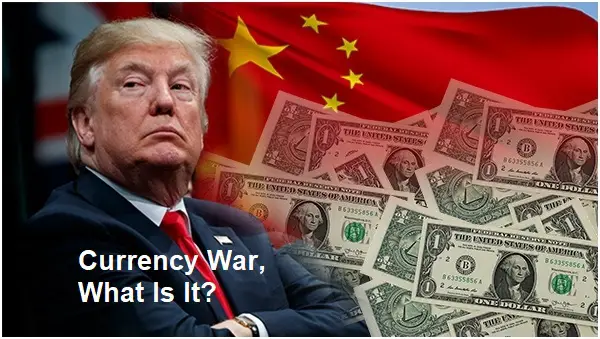
Currency is an important element in a country’s economic activities. Currency values ​​are greatly affected by factors such as inflation, interest rates, and overall economic conditions. However, sometimes countries may also compete to maintain the value of their currencies in what are known as currency wars.

A currency war is a situation where countries compete with each other to maintain or reduce the value of their currency against other countries’ currencies. This can be done in various ways, such as using foreign exchange market intervention or changing interest rates. Currency wars can occur for many reasons, such as attempts to increase exports or reduce imports, or to control inflation.

Currency wars can have a significant impact on a country’s economy, both positive and negative. However, not all countries can engage in currency wars, as several factors limit their ability to do so.

Currency wars are a complex and important topic for the global economy. In this article, we’ll explore the history of currency wars, their impact on the economies of the countries involved, and how to deal with them.

History of Currency Wars

Currency wars are not a new phenomenon in world economic history. Since the 4th century BC, nations have competed to maintain the value of their currency by a method known as “debasement”, namely by increasing the amount of precious metal in the currency issued. This is done so that the value of the currency becomes lower and is easily accepted by other people as a means of payment.

In the 20th century, currency wars broke out massively in the years following World War II. At that time, many countries were trying to maintain the value of their currency by using foreign exchange market intervention or changing interest rates. This happened because many countries wanted to increase their exports and reduce imports, as well as control inflation caused by the economic recovery after the war.

In the modern era, currency wars still occur in the same way, although there are some differences from the previous era. Countries can still use foreign exchange market intervention or change interest rates to preserve the value of their currencies, but there are also other ways this can be done, such as issuing bonds or using financial derivatives to affect currency values.

Although currency wars still occur today, there are several factors that limit the ability of countries to engage in currency wars. For example, a country with a high inflation rate or high debt level may not be able to engage in a currency war because it does not have sufficient financial strength. In addition, there are also several international agreements that prevent countries from engaging in currency wars, such as the Bretton Woods Agreement in 1944.

Impact of Currency Wars

Currency wars can have a significant impact on a country’s economy, both positive and negative. One of the main impacts is on currency values. If a country manages to maintain the value of its currency in a way that is called “currency appreciation”, then the value of the currency will increase against other countries’ currencies. This can help increase the country’s exports and reduce imports, thus increasing the trade surplus.

However, if a country fails in its efforts to maintain the value of its currency and a “currency depreciation” occurs, then the value of that currency will decrease against other countries’ currencies. This can cause the country’s exports to become more expensive for other countries, thereby reducing the demand for the country’s export products. In addition, the country’s imports will also become cheaper, thus increasing the demand for imported products from other countries. This can cause the country’s trade deficit.

In addition to the impact on currency values, currency wars can also have other effects on the economies of the countries involved. For example, if a country tries to preserve the value of its currency by increasing interest rates, this can cause the country’s economic growth to slow down because high interest rates can limit the credit available to companies and individuals. In addition, currency wars can also cause high volatility in the foreign exchange market, which can affect investor confidence and cause financial losses for the country.

How to Deal with Currency Wars

Because currency wars have a significant impact on a country’s economy, either positively or negatively. So the countries involved in a currency war must consider various steps that can be taken to deal with the war. Here are some steps that are usually taken by the countries involved, either to minimize the risk of defeat or to try to calm the war:

1 Foreign exchange market intervention: Countries can use foreign exchange market intervention to maintain the value of their currency. This intervention is carried out by selling or buying foreign currency with the aim of influencing the value of the domestic currency.
2 Changing interest rates: Countries can change interest rates to preserve the value of their currency. High interest rates can attract investors to buy the country’s bonds, which will increase the demand for domestic currency. Conversely, low interest rates can reduce the demand for domestic currency.
3 Using financial derivatives: Countries can use financial derivatives, such as currency options or currency futures, to affect the value of the domestic currency.
4 Issuing bonds: Countries can issue bonds to increase the demand for domestic currency. This is done by selling bonds to investors, who will buy these bonds in domestic currency.
5 Adopt consistent fiscal and monetary policies: Countries can maintain currency stability by implementing consistent fiscal and monetary policies. Consistent policies can increase investor confidence and reduce volatility in the foreign exchange market.


You Might Also Like

How will the Layaway plan benefit retailers and customers?

Employee Stock Option Program (ESOP)

The Definition and Process of the Accounting Cycle: Understanding the Phases and Their Benefits for the Company

Dividend Reinvestment Plan (DRIP): Compound interest program on stock investment

Lock Up: Definition and Benefits for Companies

Sign Up For Daily Newsletter

Be keep up! Get the latest breaking news delivered straight to your inbox.
By signing up, you agree to our Terms of Use and acknowledge the data practices in our Privacy Policy. You may unsubscribe at any time.
admin
Share this Article
Facebook Twitter Copy Link Print
Previous Article Getting to Know the Contagion Effect and Efforts to Handle it in the Economic Sector
Next Article Getting to Know the Black Swan: Unexpected Events That Affect the World
Leave a comment

Leave a Reply Cancel reply

Your email address will not be published. Required fields are marked *

Stay Connected

248.1k Like
69.1k Follow
134k Pin
54.3k Follow

Latest News

  • What is Proof-of-Spacetime (PoST)?

    What is Proof-of-Spacetime (PoST)?

  • 5 Reasons Ethereum is Better than Bitcoin

    5 Reasons Ethereum is Better than Bitcoin

  • Effect of Consumer Confidence Index (CCI) on economic growth

    Effect of Consumer Confidence Index (CCI) on economic growth

  • Capital Export Neutrality

    Capital Export Neutrality

  • What is meant by price discovery?

    What is meant by price discovery?

Recent Posts

  • What is meant by price discovery?

    What is meant by price discovery?

    Price discovery is a process for determining an appropriate price for an asset, security, commodity to currency. Price discovery occurs when sellers and buyers interact with each other to bid …
  • Insurance Franchise: Definition, Benefits, and Steps

    Insurance Franchise: Definition, Benefits, and Steps

    Insurance is a type of financial product that aims to protect a person’s or company’s finances from unexpected risks. However, did you know that now there is another way to …
  • Green Accounting: Preserving the Environment to Maintain Business Continuity

    Green Accounting: Preserving the Environment to Maintain Business Continuity

    The term green accounting may not be widely heard and not quite as popular as traditional accounting concepts. However, in recent years, green accounting has received a lot of attention …
  • What is the FOMC (Federal Open Market Committee)?

    What is the FOMC (Federal Open Market Committee)?

    The FOMC (Federal Open Market Committee) is the board in charge of monetary policy in the United States. The FOMC is one of the 3 main entities of the Federal …
  • What are the benefits received by fan token owners?

    What are the benefits received by fan token owners?

    Fan tokens are products derived from cryptocurrencies launched by a sports club in collaboration with crypto companies to provide space for collectors to vote on a number of decisions. Imagine …
  • Overview: These 5 Companies Set the Biggest IPO Records of All Time

    Overview: These 5 Companies Set the Biggest IPO Records of All Time

    Top 5 Companies with the Biggest IPOs of All Time Initial Public Offering (IPO) is known as a way for companies to get an injection of fresh funds as additional …
  • False Signals in Trading and the Risks

    False Signals in Trading and the Risks

    One of the reasons why we can lose when making transactions is the existence of false signals or false signals shown by the trading method that we use. Even so, …
  • Getting to Know the Business Environment: What is it and How to Understand It?

    Getting to Know the Business Environment: What is it and How to Understand It?

    The business environment is an important aspect that needs to be considered by an entrepreneur or businessman in managing and developing his business. Because the business environment includes all external …
  • Which is better, Centralized or Decentralized Financial System?

    Which is better, Centralized or Decentralized Financial System?

    What is the Financial System? The system in language has the meaning as a series consisting of various kinds of elements that are interconnected to facilitate the flow of information, …
  • Hustler, Hacker and Hipster in the Startup World

    Hustler, Hacker and Hipster in the Startup World

    When technology is developing rapidly like today, especially for digital technology, many startup companies have emerged with various innovations that they bring. Starting from fintech companies engaged in financial services …
  • Where are the capital market predators hiding?

    Where are the capital market predators hiding?

    What are capital market predators? Capital market predators are parties that try to harm a number of naive investors. The capital market should ideally be a place for investors, both …
  • InsurTech: Forms of Technology Implementation in the Insurance Industry

    InsurTech: Forms of Technology Implementation in the Insurance Industry

    Insurtech is short for “insurance technology”, which is the implementation of technology into the insurance industry. Today, insurtech is experiencing rapid growth and is starting to become an integral part …
  • The 5 Largest Asset Management Companies in the World Based on AUM

    The 5 Largest Asset Management Companies in the World Based on AUM

    Asset Management or asset management companies have a major role in providing investment services to the public, both for individual investors and companies. At least, with the help of asset …
  • Market Anomalies: Definition, Causes and Examples

    Market Anomalies: Definition, Causes and Examples

    Market anomalies are understood as unusual conditions in financial markets. There are various causes, including geopolitical events, central bank intervention, changes in a country’s interest rates and so on. Knowing …
  • Cash Flow and Interest, What’s the Difference?

    Cash Flow and Interest, What’s the Difference?

    If you look at the mechanism or workings of cash flow and interest, it seems that both are the same. In the cash flow there is money received by the …

Most Viewed Posts

  • Days Sales Outstanding (DSO) (906,076)
  • Oligopsony: Resulting Implications and Possible Solutions (906,075)
  • Critical Mass in Business: Recognizing the Concept, Influencing Factors, and How to Achieve It (906,073)
  • Currency War, What Is It? (906,014)
  • Getting to Know the Contagion Effect and Efforts to Handle it in the Economic Sector (843,041)
Follow US

© 2025 MyMoney.my.id. All Rights Reserved.

Removed from reading list

Undo
Welcome Back!

Sign in to your account

Lost your password?