MyMoney.my.id
  • Home
  • Ask and Answer
  • Psychological
  • Export import
  • About Us
    • Contact
    • Privacy Policy
Search
  • Contact
  • Blog
  • Complaint
  • Advertise
© 2023 MyMoney.my.id. All Rights Reserved.
Reading: Currency War, What Is It?
Share
Sign In
Notification Show More
Latest News
How will the Layaway plan benefit retailers and customers?
Ask and Answer
Forbes’ 5 Best Crypto Exchanges
Psychological
Employee Stock Option Program (ESOP)
Ask and Answer
The Definition and Process of the Accounting Cycle: Understanding the Phases and Their Benefits for the Company
Ask and Answer
Dividend Reinvestment Plan (DRIP): Compound interest program on stock investment
Ask and Answer
Aa
MyMoney.my.id
Aa
  • Home
  • Ask and Answer
  • Psychological
  • Export import
  • About Us
Search
  • Home
  • Ask and Answer
  • Psychological
  • Export import
  • About Us
    • Contact
    • Privacy Policy
Have an existing account? Sign In
Follow US
  • Contact
  • Blog
  • Complaint
  • Advertise
© 2022 Foxiz News Network. Ruby Design Company. All Rights Reserved.
MyMoney.my.id > Blog > Ask and Answer > Currency War, What Is It?
Ask and Answer

Currency War, What Is It?

admin
Last updated: 2023/05/25 at 1:57 AM
admin
Share
SHARE

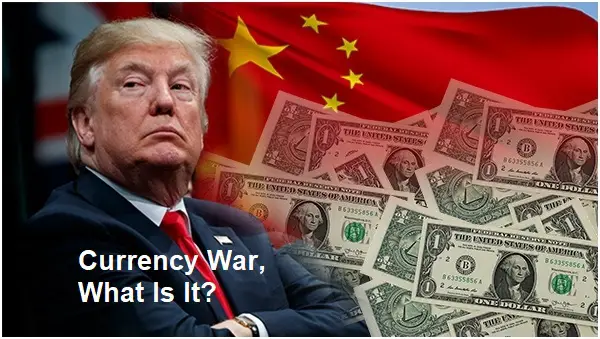
Currency is an important element in a country’s economic activities. Currency values ​​are greatly affected by factors such as inflation, interest rates, and overall economic conditions. However, sometimes countries may also compete to maintain the value of their currencies in what are known as currency wars.

A currency war is a situation where countries compete with each other to maintain or reduce the value of their currency against other countries’ currencies. This can be done in various ways, such as using foreign exchange market intervention or changing interest rates. Currency wars can occur for many reasons, such as attempts to increase exports or reduce imports, or to control inflation.

Currency wars can have a significant impact on a country’s economy, both positive and negative. However, not all countries can engage in currency wars, as several factors limit their ability to do so.

Currency wars are a complex and important topic for the global economy. In this article, we’ll explore the history of currency wars, their impact on the economies of the countries involved, and how to deal with them.

History of Currency Wars

Currency wars are not a new phenomenon in world economic history. Since the 4th century BC, nations have competed to maintain the value of their currency by a method known as “debasement”, namely by increasing the amount of precious metal in the currency issued. This is done so that the value of the currency becomes lower and is easily accepted by other people as a means of payment.

In the 20th century, currency wars broke out massively in the years following World War II. At that time, many countries were trying to maintain the value of their currency by using foreign exchange market intervention or changing interest rates. This happened because many countries wanted to increase their exports and reduce imports, as well as control inflation caused by the economic recovery after the war.

In the modern era, currency wars still occur in the same way, although there are some differences from the previous era. Countries can still use foreign exchange market intervention or change interest rates to preserve the value of their currencies, but there are also other ways this can be done, such as issuing bonds or using financial derivatives to affect currency values.

Although currency wars still occur today, there are several factors that limit the ability of countries to engage in currency wars. For example, a country with a high inflation rate or high debt level may not be able to engage in a currency war because it does not have sufficient financial strength. In addition, there are also several international agreements that prevent countries from engaging in currency wars, such as the Bretton Woods Agreement in 1944.

Impact of Currency Wars

Currency wars can have a significant impact on a country’s economy, both positive and negative. One of the main impacts is on currency values. If a country manages to maintain the value of its currency in a way that is called “currency appreciation”, then the value of the currency will increase against other countries’ currencies. This can help increase the country’s exports and reduce imports, thus increasing the trade surplus.

However, if a country fails in its efforts to maintain the value of its currency and a “currency depreciation” occurs, then the value of that currency will decrease against other countries’ currencies. This can cause the country’s exports to become more expensive for other countries, thereby reducing the demand for the country’s export products. In addition, the country’s imports will also become cheaper, thus increasing the demand for imported products from other countries. This can cause the country’s trade deficit.

In addition to the impact on currency values, currency wars can also have other effects on the economies of the countries involved. For example, if a country tries to preserve the value of its currency by increasing interest rates, this can cause the country’s economic growth to slow down because high interest rates can limit the credit available to companies and individuals. In addition, currency wars can also cause high volatility in the foreign exchange market, which can affect investor confidence and cause financial losses for the country.

How to Deal with Currency Wars

Because currency wars have a significant impact on a country’s economy, either positively or negatively. So the countries involved in a currency war must consider various steps that can be taken to deal with the war. Here are some steps that are usually taken by the countries involved, either to minimize the risk of defeat or to try to calm the war:

1 Foreign exchange market intervention: Countries can use foreign exchange market intervention to maintain the value of their currency. This intervention is carried out by selling or buying foreign currency with the aim of influencing the value of the domestic currency.
2 Changing interest rates: Countries can change interest rates to preserve the value of their currency. High interest rates can attract investors to buy the country’s bonds, which will increase the demand for domestic currency. Conversely, low interest rates can reduce the demand for domestic currency.
3 Using financial derivatives: Countries can use financial derivatives, such as currency options or currency futures, to affect the value of the domestic currency.
4 Issuing bonds: Countries can issue bonds to increase the demand for domestic currency. This is done by selling bonds to investors, who will buy these bonds in domestic currency.
5 Adopt consistent fiscal and monetary policies: Countries can maintain currency stability by implementing consistent fiscal and monetary policies. Consistent policies can increase investor confidence and reduce volatility in the foreign exchange market.


You Might Also Like

How will the Layaway plan benefit retailers and customers?

Employee Stock Option Program (ESOP)

The Definition and Process of the Accounting Cycle: Understanding the Phases and Their Benefits for the Company

Dividend Reinvestment Plan (DRIP): Compound interest program on stock investment

Lock Up: Definition and Benefits for Companies

Sign Up For Daily Newsletter

Be keep up! Get the latest breaking news delivered straight to your inbox.
By signing up, you agree to our Terms of Use and acknowledge the data practices in our Privacy Policy. You may unsubscribe at any time.
admin
Share this Article
Facebook Twitter Copy Link Print
Previous Article Getting to Know the Contagion Effect and Efforts to Handle it in the Economic Sector
Next Article Getting to Know the Black Swan: Unexpected Events That Affect the World
Leave a comment

Leave a Reply Cancel reply

Your email address will not be published. Required fields are marked *

Stay Connected

248.1k Like
69.1k Follow
134k Pin
54.3k Follow

Latest News

  • The 5 Biggest Fintech in the World Based on Market Capitalization

    The 5 Biggest Fintech in the World Based on Market Capitalization

  • Days Sales Outstanding (DSO)

    Days Sales Outstanding (DSO)

  • Overview: Want to Be a Professional Trader? You Must Meet These 5 Requirements!

    Overview: Want to Be a Professional Trader? You Must Meet These 5 Requirements!

  • OPEC: The Organization That Regulates Oil Production and Prices in Global Markets

    OPEC: The Organization That Regulates Oil Production and Prices in Global Markets

  • How will the Layaway plan benefit retailers and customers?

    How will the Layaway plan benefit retailers and customers?

Recent Posts

  • Business Continuity Planning: Important Steps and Factors to Maintain Business Continuity

    Business Continuity Planning: Important Steps and Factors to Maintain Business Continuity

    In running a business, a business strategy to increase product sales is not the only thing that must be done. Apart from that, a business must also have a plan …
  • What is Proof-of-Spacetime (PoST)?

    What is Proof-of-Spacetime (PoST)?

    Proof of spacetime (PoST) is a consensus mechanism used in blockchain networks to validate transactions and ensure network security. It does this by requiring users to prove ownership of a …
  • How to Calculate Abnormal Return

    How to Calculate Abnormal Return

    What are Abnormal Returns? Abnormal Return is a return on investment that exceeds the expected return. In stock investing, this can happen when price movements become stronger due to events …
  • What is meant by price discovery?

    What is meant by price discovery?

    Price discovery is a process for determining an appropriate price for an asset, security, commodity to currency. Price discovery occurs when sellers and buyers interact with each other to bid …
  • Getting to Know the Business Environment: What is it and How to Understand It?

    Getting to Know the Business Environment: What is it and How to Understand It?

    The business environment is an important aspect that needs to be considered by an entrepreneur or businessman in managing and developing his business. Because the business environment includes all external …
  • Top 5 Best Investment Banks Based on Revenue

    Top 5 Best Investment Banks Based on Revenue

    Overview of Investment Bank An investment bank is a banking entity that acts as a party that collects and distributes capital to companies, government agencies and the government itself. The …
  • Force Majeure: The Concept and Its Impact on Contracts

    Force Majeure: The Concept and Its Impact on Contracts

    Force majeure is a term used to describe events that occur beyond human control and cannot be avoided. Decisions taken or actions taken by a person cannot influence or control …
  • Overview: These 5 Companies Set the Biggest IPO Records of All Time

    Overview: These 5 Companies Set the Biggest IPO Records of All Time

    Top 5 Companies with the Biggest IPOs of All Time Initial Public Offering (IPO) is known as a way for companies to get an injection of fresh funds as additional …
  • How Does the Business Accelerator Program Work?

    How Does the Business Accelerator Program Work?

    Business Accelerator, Fast and Effective Solution to Improve Your Business Are you a young entrepreneur looking to grow your business fast? Or maybe you are a business owner who has …
  • How the Business Exit Strategy Works

    How the Business Exit Strategy Works

    Business exit strategy is a plan used by an entrepreneur or company to sell or return its shares to its shareholders. This is usually done when a company wants to …
  • Use of Tokenomics in Cryptocurrency Analysis

    Use of Tokenomics in Cryptocurrency Analysis

    What is Tokenomics? Tokenomics is an economic model for digital currencies or tokens created with blockchain technology. This includes how tokens are used, how they are distributed, and how they …
  • OPEC: The Organization That Regulates Oil Production and Prices in Global Markets

    OPEC: The Organization That Regulates Oil Production and Prices in Global Markets

    In the 1960s, oil producing countries formed an organization called OPEC. They formed the organization as a form of dissatisfaction with the control of foreign oil companies over the resources …
  • Polluter Pays Principle

    Polluter Pays Principle

    The Polluter Pays Principle is a generally accepted practice in which polluters must bear the costs of managing the pollution they create to prevent harm to human health or the …
  • Tax Control Framework (TCF)

    Tax Control Framework (TCF)

    The Tax Control Framework is a concept that is integrated with good corporate governance or good corporate governance. The tax control framework, or commonly abbreviated as TCF, is a framework …
  • Dividend Reinvestment Plan (DRIP): Compound interest program on stock investment

    Dividend Reinvestment Plan (DRIP): Compound interest program on stock investment

    Dividends are profits generated from investing in stocks. Dividends are part of the company’s profits distributed to investors. Dividend distribution is generally carried out in cash, but under certain conditions, …

Most Viewed Posts

  • Currency War, What Is It? (907,211)
  • Critical Mass in Business: Recognizing the Concept, Influencing Factors, and How to Achieve It (907,169)
  • Days Sales Outstanding (DSO) (907,169)
  • Oligopsony: Resulting Implications and Possible Solutions (907,167)
  • Getting to Know the Contagion Effect and Efforts to Handle it in the Economic Sector (844,095)
Follow US

© 2025 MyMoney.my.id. All Rights Reserved.

Removed from reading list

Undo
Welcome Back!

Sign in to your account

Lost your password?