MyMoney.my.id
  • Home
  • Ask and Answer
  • Psychological
  • Export import
  • About Us
    • Contact
    • Privacy Policy
Search
  • Contact
  • Blog
  • Complaint
  • Advertise
© 2023 MyMoney.my.id. All Rights Reserved.
Reading: Who Makes Transactions in the Forex Market?
Share
Sign In
Notification Show More
Latest News
How will the Layaway plan benefit retailers and customers?
Ask and Answer
Forbes’ 5 Best Crypto Exchanges
Psychological
Employee Stock Option Program (ESOP)
Ask and Answer
The Definition and Process of the Accounting Cycle: Understanding the Phases and Their Benefits for the Company
Ask and Answer
Dividend Reinvestment Plan (DRIP): Compound interest program on stock investment
Ask and Answer
Aa
MyMoney.my.id
Aa
  • Home
  • Ask and Answer
  • Psychological
  • Export import
  • About Us
Search
  • Home
  • Ask and Answer
  • Psychological
  • Export import
  • About Us
    • Contact
    • Privacy Policy
Have an existing account? Sign In
Follow US
  • Contact
  • Blog
  • Complaint
  • Advertise
© 2022 Foxiz News Network. Ruby Design Company. All Rights Reserved.
MyMoney.my.id > Blog > Ask and Answer > Who Makes Transactions in the Forex Market?
Ask and Answer

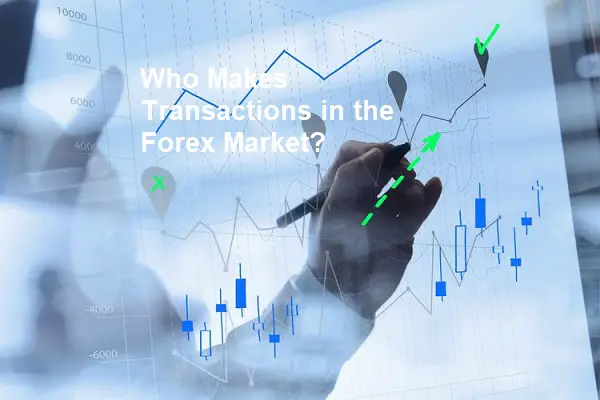
Who Makes Transactions in the Forex Market?

admin
Last updated: 2022/12/14 at 6:38 AM
admin
Share
SHARE

Foreign Exchange (Forex) or foreign exchange (forex) has a dynamic value. Even price changes in the forex market can occur significantly in a short time. For example, when the release of economic data for a country is considered important by market participants.

Price changes that occur in the forex market are basically the work of market participants. Decisions from the majority of market participants or what is known as market sentiment will push prices in a certain direction, whether it’s up or down. Even the strength of market participants can force a central bank to give up its intervention to prevent a country’s currency from falling. In fact, the central bank is known as the most influential market player in the forex market because of the very large volume of transactions.

What are Market Participants?

Market participants are words that are similar to business people. Market participants mean people or parties involved in trading activities in a market. In short, market participants are traders or buyers and sellers.

Market participants, especially for financial markets, have an important role in influencing the dynamics of price movements. The decisions of the majority of market participants or what is known as market sentiment can push the price of an asset in a certain direction. For example, if the majority of market participants want to buy a currency, the value of that currency will strengthen. And vice versa, if the majority of market participants sell a currency. So the value of the lowest currency will weaken.

Forex Market Participants

The forex market is no different from any other financial market. The forex market is also heavily influenced by market participants. And even the forex market participants are the most among other financial markets.

Market participants in the forex market generally have two goals. First, for trading and second for exchange.

1. Traders

Forex market participants with the aim of trading are called traders. Traders in Indonesian are traders or people who buy and sell.

Traders are classified into two types:

• Institutional Traders

Institutional traders are institutions or companies that carry out transactions in the forex market to benefit from the difference between the buying price and the selling price. Institutional traders are generally banks, hedge funds, financial institutions (non-banks) and others. However, to become an institutional trader, the real size is not the organization or group, but the capital used.

Institutional traders have very large capital with large trading volumes. For this reason, transactions carried out by institutional traders greatly influence price movements in the forex market. Even market sentiment is basically formed by a collection of transactions from several institutional traders, not retail or individuals.

• Retail traders

Retail traders are people or groups who make transactions in the forex market with relatively low capital. Rite traders also make transactions to make a profit from the difference between the purchase price and the selling price. It’s just that retail traders don’t have a significant “contribution” in moving prices in the forex market or shaping forex market sentiment.

Retail traders contribute a small amount of transaction volume to the forex market. The volume is actually not very significant, because the real market movers are institutions. Even based on 2019 data, retail traders only account for around 5% of the total transaction volume on the forex market. Therefore, all actions or decisions taken by retail market players can be considered as having no effect on price movements.

2. Exchangers

An exchanger is a forex market participant who conducts currency exchange transactions for the purpose of using money as a medium of exchange in a country. The Exchanger also consists of several parties, including:

• Exporters and Importers

Exporters and importers are market participants who carry out exchanges for the benefit of trade between countries or internationally. Importers do exchanges to be able to buy goods from abroad. Meanwhile, importers exchange for payments received in foreign currency.

• Banks

Banks are financial institutions that provide various types of financial services. One of them went abroad and received transfers from abroad. For this reason, banks generally also exchange between currencies based on the interests of customers.

• International Tourists

Foreign tourists are foreign exchange market participants who exchange for the needs of using a country’s currency. The difference with other exchangers is that foreign tourists do exchanges not based on business interests but for entertainment purposes.

• Foreign investors

Foreign investors also indirectly exchange when investing in a country. For example, a foreign company invests 100 billion USD in a domestic company. Well, the value of 100 billion will definitely be converted into domestic currency for use by companies.

• Foreign workers

Foreign workers are also forex market participants who conduct exchanges. Foreign workers exchange when sending their salary in foreign currency to their families in a country. Therefore, TKI or TKW who work abroad are called foreign exchange heroes.

Conclusion

So, forex market participants generally consist of traders and exchangers. Both types of market players influence the dynamics of price changes in the market to a certain proportion. The most influential market player is the central bank, while the least influential are retail market players or individuals.

Among exchangers and traders are retail and institutional market participants. Retail exchangers for example, foreign tourists, foreign workers and others. Meanwhile, institutional exchanges include investors, banks and also exporters or importers. Meanwhile, retail traders, for example, forex traders like us today. And institutional traders such as Hedge funds or similar institutions.

You Might Also Like

How will the Layaway plan benefit retailers and customers?

Employee Stock Option Program (ESOP)

The Definition and Process of the Accounting Cycle: Understanding the Phases and Their Benefits for the Company

Dividend Reinvestment Plan (DRIP): Compound interest program on stock investment

Lock Up: Definition and Benefits for Companies

Sign Up For Daily Newsletter

Be keep up! Get the latest breaking news delivered straight to your inbox.
By signing up, you agree to our Terms of Use and acknowledge the data practices in our Privacy Policy. You may unsubscribe at any time.
admin
Share this Article
Facebook Twitter Copy Link Print
Previous Article Getting to Know the Business Environment: What is it and How to Understand It?
Next Article Yield to Call (YTC): Definition, Formulas and How to Calculate It
Leave a comment

Leave a Reply Cancel reply

Your email address will not be published. Required fields are marked *

Stay Connected

248.1k Like
69.1k Follow
134k Pin
54.3k Follow

Latest News

  • Getting to Know the Contagion Effect and Efforts to Handle it in the Economic Sector

    Getting to Know the Contagion Effect and Efforts to Handle it in the Economic Sector

  • Asset Allocation: How to Optimize Profits and Minimize Investment Risk Simultaneously

    Asset Allocation: How to Optimize Profits and Minimize Investment Risk Simultaneously

  • What is Proof-of-Spacetime (PoST)?

    What is Proof-of-Spacetime (PoST)?

  • OPEC: The Organization That Regulates Oil Production and Prices in Global Markets

    OPEC: The Organization That Regulates Oil Production and Prices in Global Markets

  • These 5 Businesses are Proven to Survive in the Midst of a Crisis

    These 5 Businesses are Proven to Survive in the Midst of a Crisis

Recent Posts

  • How Does the Business Accelerator Program Work?

    How Does the Business Accelerator Program Work?

    Business Accelerator, Fast and Effective Solution to Improve Your Business Are you a young entrepreneur looking to grow your business fast? Or maybe you are a business owner who has …
  • Drip Marketing: How to Use Drip Marketing to Increase Sales

    Drip Marketing: How to Use Drip Marketing to Increase Sales

    Drip Marketing is a marketing strategy that is considered effective in increasing product sales. Drip marketing is a long-term marketing strategy that is carried out on an ongoing basis, so …
  • Get to know the General Ledger: How it Works and Benefits in Managing Company Finances

    Get to know the General Ledger: How it Works and Benefits in Managing Company Finances

    General Ledger is an important part of the company’s financial system. Through General Ledger, companies can record and manage all financial transactions that occur, from receiving money to spending money. …
  • What are International Money Orders?

    What are International Money Orders?

    The International Money Order is one of the most popular ways to send money overseas. An International Money Order is a kind of check issued by a financial company or …
  • How to avoid partnership trap condition

    How to avoid partnership trap condition

    Partnership trap is a condition when a party (individual or company) enters into a partnership with another party and has been legally ratified complete with various clauses and agreements but …
  • Market Anomalies: Definition, Causes and Examples

    Market Anomalies: Definition, Causes and Examples

    Market anomalies are understood as unusual conditions in financial markets. There are various causes, including geopolitical events, central bank intervention, changes in a country’s interest rates and so on. Knowing …
  • What are the benefits received by fan token owners?

    What are the benefits received by fan token owners?

    Fan tokens are products derived from cryptocurrencies launched by a sports club in collaboration with crypto companies to provide space for collectors to vote on a number of decisions. Imagine …
  • Sidechain: Definition, Functions, and Weaknesses

    Sidechain: Definition, Functions, and Weaknesses

    Blockchain is a digital database where cryptocurrencies are transacted. Blockchain has network nodes that act as validators while maintaining the security of the blockchain network from hacking. In a crypto …
  • The Relationship Between Fundamental News with Forex Market Fluctuations

    The Relationship Between Fundamental News with Forex Market Fluctuations

    Fundamental news or what is often called news is a report on economic data or policy announcements by certain authorities from a country. These data are generally indicators used by …
  • Get to know what a solvency ratio is and its importance in assessing a company’s financial condition

    Get to know what a solvency ratio is and its importance in assessing a company’s financial condition

    The Solvency Ratio is one of the ratios used to assess a company’s financial health. This ratio is commonly used by investors before investing in a company, creditors before making …
  • False Signals in Trading and the Risks

    False Signals in Trading and the Risks

    One of the reasons why we can lose when making transactions is the existence of false signals or false signals shown by the trading method that we use. Even so, …
  • What is a Brownfield Investment? Advantages and Risks and How to Avoid Them

    What is a Brownfield Investment? Advantages and Risks and How to Avoid Them

    Brownfield investment is one type of investment that is often made by companies or investors. Brownfield investment is an investment made in a project or business that already exists and …
  • Cash Flow and Interest, What’s the Difference?

    Cash Flow and Interest, What’s the Difference?

    If you look at the mechanism or workings of cash flow and interest, it seems that both are the same. In the cash flow there is money received by the …
  • How the Business Exit Strategy Works

    How the Business Exit Strategy Works

    Business exit strategy is a plan used by an entrepreneur or company to sell or return its shares to its shareholders. This is usually done when a company wants to …
  • What is the FOMC (Federal Open Market Committee)?

    What is the FOMC (Federal Open Market Committee)?

    The FOMC (Federal Open Market Committee) is the board in charge of monetary policy in the United States. The FOMC is one of the 3 main entities of the Federal …

Most Viewed Posts

  • Days Sales Outstanding (DSO) (981,576)
  • Currency War, What Is It? (981,524)
  • Oligopsony: Resulting Implications and Possible Solutions (981,509)
  • Critical Mass in Business: Recognizing the Concept, Influencing Factors, and How to Achieve It (981,166)
  • Getting to Know the Contagion Effect and Efforts to Handle it in the Economic Sector (910,940)
Follow US

© 2025 MyMoney.my.id. All Rights Reserved.

Removed from reading list

Undo
Welcome Back!

Sign in to your account

Lost your password?