MyMoney.my.id
  • Home
  • Ask and Answer
  • Psychological
  • Export import
  • About Us
    • Contact
    • Privacy Policy
Search
  • Contact
  • Blog
  • Complaint
  • Advertise
© 2023 MyMoney.my.id. All Rights Reserved.
Reading: Stop Using Full Margin when Trading! Know the Dangers!
Share
Sign In
Notification Show More
Latest News
How will the Layaway plan benefit retailers and customers?
Ask and Answer
Forbes’ 5 Best Crypto Exchanges
Psychological
Employee Stock Option Program (ESOP)
Ask and Answer
The Definition and Process of the Accounting Cycle: Understanding the Phases and Their Benefits for the Company
Ask and Answer
Dividend Reinvestment Plan (DRIP): Compound interest program on stock investment
Ask and Answer
Aa
MyMoney.my.id
Aa
  • Home
  • Ask and Answer
  • Psychological
  • Export import
  • About Us
Search
  • Home
  • Ask and Answer
  • Psychological
  • Export import
  • About Us
    • Contact
    • Privacy Policy
Have an existing account? Sign In
Follow US
  • Contact
  • Blog
  • Complaint
  • Advertise
© 2022 Foxiz News Network. Ruby Design Company. All Rights Reserved.
MyMoney.my.id > Blog > Business > Stop Using Full Margin when Trading! Know the Dangers!
Business

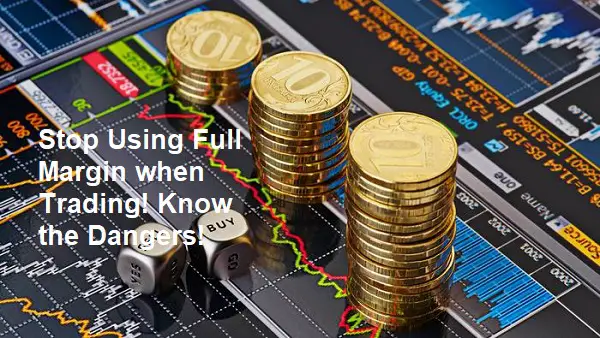
Stop Using Full Margin when Trading! Know the Dangers!

admin
Last updated: 2022/12/16 at 6:56 AM
admin
Share
SHARE

Full margin in forex trading is using the lot size until the free margin runs out when making transactions. Simply put, full margin is an “all in” way of trading, aka risking everything on one occasion. This method is indeed more suitable as a method of gambling rather than being used as a method of doing business.

Full margin is absolutely not recommended when trading. Because the risk is clearly big and violates the rules of capital and risk management. While trading itself is a business and normally a business is run carefully so as not to go bankrupt and survive as long as possible.

Why Do Traders Use “Full Margin” when Trading?

Even though it has a big risk, full margin is an instant way to generate large amounts of profit. And unfortunately the majority of traders like that way. They like to earn big profits without much effort. Therefore, many traders do “full margin”. Even if they know that the risk that must be borne is to lose all trading capital.

On the other hand, psychological pressure can also trigger traders to do full margin. For example, when traders lose consecutively even after careful analysis, there must be great stress on the trader’s mentality. Especially if the trader is a beginner, who is just getting into the forex trading business. This situation can make traders desperate, frustrated or something else and finally choose to do full margin.

Full Margin Danger

The most visible danger from full margin action is the loss of capital, aka margin calls. Because using full margin makes capital resistance very low, so it’s very easy to experience a margin call.

However, apart from that there are other, bigger dangers, namely making full margin a habit when trading. This can happen when traders repeatedly do full margin. And when traders do it the umpteenth time, full margin is ingrained in the subconscious and turns into a habit.

As we know, habits are difficult to change. So, you can imagine if traders have a habit of doing full margin every time they trade. If you are lucky, the profits will be very large. But what if the trader is unlucky? Wouldn’t the trader lose more money, even than he previously earned?

Can Full Margin Trading Be Successful?

Why do you think the majority of forex traders fail? Because they do full margin. And only a few are lucky and manage to get big profits.

The problem is, are you lucky enough to be one of those people who succeed with full margin? or you even enter the line of people who fail, whose number is even greater.

Full margin sure is a bad habit. And it is highly not recommended to do it while trading. Not even a single professional trader advocates full margin. Except for people who have certain interests, for example the person works with a broker and gets a commission for making traders lose, influencing traders to do full margin so traders have the opportunity to call margins and so on.

Can a trader continue to be successful with a full margin or full lot trading style?

One of the attractions offered in online forex and stock trading activities is the existence of a margin facility that allows traders to carry out trading activities, both buying and selling activities, exceeding the limits on the capital or funds available and owned by traders.

This margin trading facility is a facility provided by a securities company or broker intended for its clients (traders) for the purpose of boosting performance, and multiplying the value or volume of trades so that the chances and opportunities for profit / profit will also increase the probability. However, behind the positive appeal offered through the provision of margin facilities, the risk of a trader experiencing loss and MC is also very large.

Regarding the question of whether you can be successful with a full margin trading style in forex trading activities, the most common answer based on my trading experience so far is no or if there are very few hits it has the potential to plunge a trader into the risk of failure, loss and loss of capital quickly and repeatedly whose impact can be psychologically disturbing is not having the confidence to be successful in making consistent profits in the world of forex trading.

The following are the reasons why it is difficult for a trader to be successful with a full margin trading style, including:

* Trends and trends in currency prices in the forex market always move dynamically with fast fluctuations and are difficult to predict even if you use a technical and fundamental analysis approach.
* Trading using full lots or full margin increases the risk of experiencing loss and MC is very fast.
* In trading with full margin, the probability of making a profit is less than the probability of being exposed to the risk of loss and loss of capital.
* The approach to trading with full margin is more towards aspects of speculation and contains elements of gambling and greed.
* Trading with the full margin method does not meet the requirements and criteria for good money management.
* Trading with full margin has an effect on our unstable psychology.
* The use of unmeasured lots will make margin trading less robust.

Conclusion

Let’s trade using good capital and risk management so that we can last a long time in this forex trading business. Although maybe the profit we get is not as big as people who do full margin. But if we can be consistent and disciplined for a long time we can also make profits like these people and even bigger.
You Might Also Like

Top 5 Unicorns with the Highest Valuation in the World

The 5 Most Successful Investors in the World

Get to know the World’s Largest Investment and Asset Management Company: BlackRock Inc

Getting to Know the Black Swan: Unexpected Events That Affect the World

What is a Node in a Blockchain Network?

Sign Up For Daily Newsletter

Be keep up! Get the latest breaking news delivered straight to your inbox.
By signing up, you agree to our Terms of Use and acknowledge the data practices in our Privacy Policy. You may unsubscribe at any time.
admin
Share this Article
Facebook Twitter Copy Link Print
Previous Article Yield to Call (YTC): Definition, Formulas and How to Calculate It
Next Article What is meant by Economic Recovery?
Leave a comment

Leave a Reply Cancel reply

Your email address will not be published. Required fields are marked *

Stay Connected

248.1k Like
69.1k Follow
134k Pin
54.3k Follow

Latest News

  • Market Anomalies: Definition, Causes and Examples

    Market Anomalies: Definition, Causes and Examples

  • Yield to Call (YTC): Definition, Formulas and How to Calculate It

    Yield to Call (YTC): Definition, Formulas and How to Calculate It

  • InsurTech: Forms of Technology Implementation in the Insurance Industry

    InsurTech: Forms of Technology Implementation in the Insurance Industry

  • Cash Flow and Interest, What’s the Difference?

    Cash Flow and Interest, What’s the Difference?

  • Mortgage Advantages and The Risks

    Mortgage Advantages and The Risks

Recent Posts

  • Oligopsony: Resulting Implications and Possible Solutions

    Oligopsony: Resulting Implications and Possible Solutions

    Oligopsony is a situation where there are few buyers who control the selling price of a good or service. This condition can occur in various sectors, such as the manufacturing …
  • Dividend Reinvestment Plan (DRIP): Compound interest program on stock investment

    Dividend Reinvestment Plan (DRIP): Compound interest program on stock investment

    Dividends are profits generated from investing in stocks. Dividends are part of the company’s profits distributed to investors. Dividend distribution is generally carried out in cash, but under certain conditions, …
  • Brand Awareness: Definition, Benefits, How to Build, and The Indicators

    Brand Awareness: Definition, Benefits, How to Build, and The Indicators

    In running a business, making innovative products and having good quality is not enough. Business actors must also be able to market these products among consumers, compete with other products …
  • Tax Control Framework (TCF)

    Tax Control Framework (TCF)

    The Tax Control Framework is a concept that is integrated with good corporate governance or good corporate governance. The tax control framework, or commonly abbreviated as TCF, is a framework …
  • How does Multichain work?

    How does Multichain work?

    Multichain Cryptocurrencies were originally created as an alternative means of payment to the fiat we use every day. However, in its development, different cryptocurrencies emerged with different market values. With …
  • What is meant by price discovery?

    What is meant by price discovery?

    Price discovery is a process for determining an appropriate price for an asset, security, commodity to currency. Price discovery occurs when sellers and buyers interact with each other to bid …
  • Employee Stock Option Program (ESOP)

    Employee Stock Option Program (ESOP)

    Employee Stock Option Program – ESOP is a program from the company to employees by giving employees the right to buy shares of the company. This program allows employees to …
  • How to analyze the fundamentals of insurance companies

    How to analyze the fundamentals of insurance companies

    Warren Buffett is one of the most successful investors of all time and one of his favorite sectors of stocks is insurance companies. The reason is simple, as long as …
  • False Signals in Trading and the Risks

    False Signals in Trading and the Risks

    One of the reasons why we can lose when making transactions is the existence of false signals or false signals shown by the trading method that we use. Even so, …
  • Drip Marketing: How to Use Drip Marketing to Increase Sales

    Drip Marketing: How to Use Drip Marketing to Increase Sales

    Drip Marketing is a marketing strategy that is considered effective in increasing product sales. Drip marketing is a long-term marketing strategy that is carried out on an ongoing basis, so …
  • Currency War, What Is It?

    Currency War, What Is It?

    Currency is an important element in a country’s economic activities. Currency values ​​are greatly affected by factors such as inflation, interest rates, and overall economic conditions. However, sometimes countries may …
  • Market Anomalies: Definition, Causes and Examples

    Market Anomalies: Definition, Causes and Examples

    Market anomalies are understood as unusual conditions in financial markets. There are various causes, including geopolitical events, central bank intervention, changes in a country’s interest rates and so on. Knowing …
  • Capital Export Neutrality

    Capital Export Neutrality

    Capital export neutrality is a concept that refers to a situation in which a country does not influence the flow of capital in or out through economic policies or other …
  • Asset Revaluation and its Benefits for the Company

    Asset Revaluation and its Benefits for the Company

    Fixed assets have a dynamic value or change over time. Some assets have a value that tends to decrease from their value when they were first acquired. But, some others …
  • 5 Countries with the Highest Debt to GDP Ratio

    5 Countries with the Highest Debt to GDP Ratio

    The debt to GDP ratio or Debt to GDP Ratio is the ratio used to measure a country’s ability to pay debts. The debt ratio is generated by dividing the …

Most Viewed Posts

  • Currency War, What Is It? (910,619)
  • Critical Mass in Business: Recognizing the Concept, Influencing Factors, and How to Achieve It (910,610)
  • Days Sales Outstanding (DSO) (910,598)
  • Oligopsony: Resulting Implications and Possible Solutions (910,555)
  • Getting to Know the Contagion Effect and Efforts to Handle it in the Economic Sector (847,183)
Follow US

© 2025 MyMoney.my.id. All Rights Reserved.

Removed from reading list

Undo
Welcome Back!

Sign in to your account

Lost your password?