MyMoney.my.id
  • Home
  • Ask and Answer
  • Psychological
  • Export import
  • About Us
    • Contact
    • Privacy Policy
Search
  • Contact
  • Blog
  • Complaint
  • Advertise
© 2023 MyMoney.my.id. All Rights Reserved.
Reading: Polluter Pays Principle
Share
Sign In
Notification Show More
Latest News
How will the Layaway plan benefit retailers and customers?
Ask and Answer
Forbes’ 5 Best Crypto Exchanges
Psychological
Employee Stock Option Program (ESOP)
Ask and Answer
The Definition and Process of the Accounting Cycle: Understanding the Phases and Their Benefits for the Company
Ask and Answer
Dividend Reinvestment Plan (DRIP): Compound interest program on stock investment
Ask and Answer
Aa
MyMoney.my.id
Aa
  • Home
  • Ask and Answer
  • Psychological
  • Export import
  • About Us
Search
  • Home
  • Ask and Answer
  • Psychological
  • Export import
  • About Us
    • Contact
    • Privacy Policy
Have an existing account? Sign In
Follow US
  • Contact
  • Blog
  • Complaint
  • Advertise
© 2022 Foxiz News Network. Ruby Design Company. All Rights Reserved.
MyMoney.my.id > Blog > Ask and Answer > Polluter Pays Principle
Ask and Answer

Polluter Pays Principle

admin
Last updated: 2024/01/22 at 12:56 AM
admin
Share
SHARE

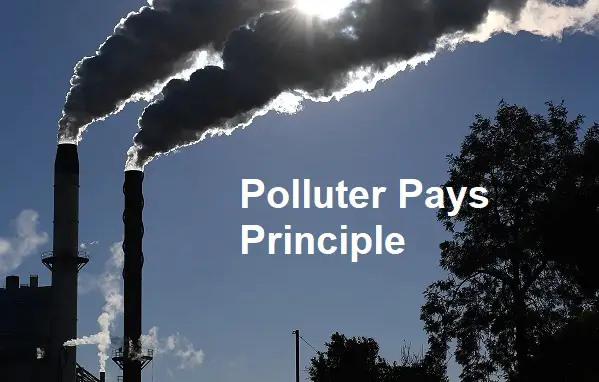
The Polluter Pays Principle is a generally accepted practice in which polluters must bear the costs of managing the pollution they create to prevent harm to human health or the environment. For example, manufacturers who produce potentially toxic substances as by-products of their activities must be responsible for handling them safely. The Polluter Pays Principle is part of a broader set of principles guiding sustainable development around the world (formally known as the 1992 Rio Declaration). These principles form the basis for most pollution regulations affecting land, water and air.

Evolutionary History of the Creation of the Polluter Pays Principle (PPP)

From a legal perspective, there is precedent referring to the state’s obligation to guarantee and compensate polluters. This occurred in the 1938-1941 smelting arbitration case between Canada and the United States, in which a court ordered Canada and the United States to reduce and prevent damage from air pollution in Washington State.

As Europe seeks to incorporate common solutions to reduce environmental pollution, the Polluter Pays Principle (PPP) appeared in the 1968 “Declaration of Principles” on Air Pollution Control adopted by the Committee of Ministers of the Council of Europe.

The PPP principle states: The costs incurred to prevent or reduce pollution must be borne by the party that caused it. This is no exception from public authorities. Later, in response to similar concerns about the environment, it was included in an OECD instrument but was non-binding. The 1972 OECD Recommendation Concerning Guiding Principles on International Economic Aspects of Environmental Policy, which is recognized as the first international document governing public-private partnerships. The recommendation establishes the following principles:

The principle of allocating the costs of pollution prevention and control measures to promote the rational use of scarce environmental resources and avoid distortions in international trade and investment. This principle implies that polluters should bear the cost of implementing the above-mentioned measures decided by public authorities to ensure that the environment is in an acceptable state. In other words, the costs of these actions must be reflected in the costs of producing and/or consuming polluting goods and services.

The European Community (now the European Union) also articulated the adoption of progressive PPPs, including the Program for Action on the Environment (1973), Recommendations on Cost Allocations and Actions of Public Authorities on Environmental Matters and in 1986 adopted The Single European Act. Finally, PPPs serve as the core principles and strict legal standards of the European legal system that guide and implement EU environmental policies. Although the principle is not widely used outside the European Union and the United States, other countries such as Australia, Ghana and Zimbabwe have incorporated the principle into policies and regulations.

The regulations follow the lines of international cooperation on responsibility and compensation for the effects of pollution that emerged during the 1972 United Nations Conference on the Human Environment and incorporate Principle 22 of the Stockholm Declaration. 20 years later, PPP was widely incorporated into Principle 16 of the Rio Declaration on Environment and Development adopted by the United Nations Conference on Environment and Development (Earth Summit).

Can the Polluter Pays Principle work?

Regardless of the type of instrument used, many economists agree that the amount of carbon must be uniform globally, and across countries and sectors, so that polluters do not simply shift operations to so-called “pollution havens”. The High Commission on Carbon Pricing report (2017) estimates that the appropriate global carbon amount should be US$ 40-80/tCO 2 e in 2020 and US$ 50-100/tCO 2 e in 2030. For jurisdictions using carbon taxes , this requires a direct rate at the corresponding carbon price. However, carbon taxes are often difficult to implement politically. For jurisdictions with emissions trading systems, stricter restrictions could be imposed to limit supply clearances thereby indirectly driving up carbon prices to Paris Agreement-compliant levels.

Environmental issues have indeed become an issue that is considered seriously in the last few decades. As far as I know, the world’s concern about the greenhouse effect has occurred since the decade of the 80s. But the discussion of environmental issues, especially global warming, has only emerged seriously in the last 10 years. Many things were discussed and agreed upon, especially regarding global warming, and the concept of the polluter pays principle is one of the results.

The Polluter Pays Principle is a concept in which countries or parties that produce pollution must pay compensation for the pollution they produce. The compensation fund will ideally be projected for various environmental preservation efforts. Logically, the party causing the damage (pollution) must compensate for the damage. Indeed, in principle, the pollution created will burden the environment and cannot be valued in money. But pollution will continue because of human need for industry, and at least with that money the impact of environmental damage can be minimized. So, the aspiration to create sustainable and sustainable environmental conditions can go hand in hand with industrial interests, more or less that’s the basic idea.

In this polluter pays principle concept, there are two payment mechanisms that can be made. First, based on the amount of waste or pollution produced. In this method, the amount of money that must be paid by the polluter is dependent on the volume of waste/pollution produced, the more pollution, the more expensive the fees to be paid. The second concept is with a quota system, so each party, for example a state or a company, has a quota limit for producing pollutants. If the quota is exceeded, pollutant producers must pay a fine as compensation.

The money obtained from these polluters will be used to finance environmental preservation. For example, for planting trees, reforestation, or making pollution treatment facilities. The recipient of this money is the government or the aggrieved party. Internationally, it is reported that there will be quotas for each country in producing pollutants. If the quota is exceeded, polluting countries must pay this compensation money to countries with minimal pollution so that the world’s balance in environmental matters will be maintained.
You Might Also Like

How will the Layaway plan benefit retailers and customers?

Employee Stock Option Program (ESOP)

The Definition and Process of the Accounting Cycle: Understanding the Phases and Their Benefits for the Company

Dividend Reinvestment Plan (DRIP): Compound interest program on stock investment

Lock Up: Definition and Benefits for Companies

Sign Up For Daily Newsletter

Be keep up! Get the latest breaking news delivered straight to your inbox.
By signing up, you agree to our Terms of Use and acknowledge the data practices in our Privacy Policy. You may unsubscribe at any time.
admin
Share this Article
Facebook Twitter Copy Link Print
Previous Article Capital Export Neutrality
Next Article False Signals in The Forex Trading and the Risks
Leave a comment

Leave a Reply Cancel reply

Your email address will not be published. Required fields are marked *

Stay Connected

248.1k Like
69.1k Follow
134k Pin
54.3k Follow

Latest News

  • Get to know the General Ledger: How it Works and Benefits in Managing Company Finances

    Get to know the General Ledger: How it Works and Benefits in Managing Company Finances

  • Getting to Know the Business Environment: What is it and How to Understand It?

    Getting to Know the Business Environment: What is it and How to Understand It?

  • The difference between Mirror trading and copy trading

    The difference between Mirror trading and copy trading

  • Top 5 Best Investment Banks Based on Revenue

    Top 5 Best Investment Banks Based on Revenue

  • Example of Marginal Rate of Substitution (MRS) Application

    Example of Marginal Rate of Substitution (MRS) Application

Recent Posts

  • It used to be worth $ 0, this is how the price of Bitcoin changes from year to year

    It used to be worth $ 0, this is how the price of Bitcoin changes from year to year

    Bitcoin is a cryptocurrency asset that has the largest market capitalization in the world, as well as being the most expensive cryptocurrency at the moment. The amount of supply of …
  • The Definition and Process of the Accounting Cycle: Understanding the Phases and Their Benefits for the Company

    The Definition and Process of the Accounting Cycle: Understanding the Phases and Their Benefits for the Company

    The accounting cycle is a continuous process used by companies to follow the flow of money and financial information. This is very important because it helps companies understand their financial …
  • What is meant by price discovery?

    What is meant by price discovery?

    Price discovery is a process for determining an appropriate price for an asset, security, commodity to currency. Price discovery occurs when sellers and buyers interact with each other to bid …
  • What is Interest Bearing Debt to Equity?

    What is Interest Bearing Debt to Equity?

    The interest bearing debt to equity ratio is the ratio that shows how much interest-bearing debt the company holds compared to its equity. The higher this ratio, the higher the …
  • Hustler, Hacker and Hipster in the Startup World

    Hustler, Hacker and Hipster in the Startup World

    When technology is developing rapidly like today, especially for digital technology, many startup companies have emerged with various innovations that they bring. Starting from fintech companies engaged in financial services …
  • Getting to Know the Business Environment: What is it and How to Understand It?

    Getting to Know the Business Environment: What is it and How to Understand It?

    The business environment is an important aspect that needs to be considered by an entrepreneur or businessman in managing and developing his business. Because the business environment includes all external …
  • Oligopsony: Resulting Implications and Possible Solutions

    Oligopsony: Resulting Implications and Possible Solutions

    Oligopsony is a situation where there are few buyers who control the selling price of a good or service. This condition can occur in various sectors, such as the manufacturing …
  • Critical Mass in Business: Recognizing the Concept, Influencing Factors, and How to Achieve It

    Critical Mass in Business: Recognizing the Concept, Influencing Factors, and How to Achieve It

    Critical Mass is a very important concept in the business world, especially in determining the success of a company. Critical Mass is the point at which a business has reached …
  • The 5 Worst Crisis That Ever Happened to the World Economy

    The 5 Worst Crisis That Ever Happened to the World Economy

    2023 is predicted to be a dark year for the global economy. Many parties predict that the world economy will experience a recession and even be at risk of experiencing …
  • Tax Control Framework (TCF)

    Tax Control Framework (TCF)

    The Tax Control Framework is a concept that is integrated with good corporate governance or good corporate governance. The tax control framework, or commonly abbreviated as TCF, is a framework …
  • Yield to Call (YTC): Definition, Formulas and How to Calculate It

    Yield to Call (YTC): Definition, Formulas and How to Calculate It

    Yield to Call is a metric used in calculating the profit potential of a convertible bond. You can use this method to compare the rate of return on a convertible …
  • How Does the Business Accelerator Program Work?

    How Does the Business Accelerator Program Work?

    Business Accelerator, Fast and Effective Solution to Improve Your Business Are you a young entrepreneur looking to grow your business fast? Or maybe you are a business owner who has …
  • How to avoid partnership trap condition

    How to avoid partnership trap condition

    Partnership trap is a condition when a party (individual or company) enters into a partnership with another party and has been legally ratified complete with various clauses and agreements but …
  • Get to know what a solvency ratio is and its importance in assessing a company’s financial condition

    Get to know what a solvency ratio is and its importance in assessing a company’s financial condition

    The Solvency Ratio is one of the ratios used to assess a company’s financial health. This ratio is commonly used by investors before investing in a company, creditors before making …
  • What is Gamma Hedging?

    What is Gamma Hedging?

    Gamma hedging is a trading strategy that is carried out to try to maintain fluctuations or price fluctuations in the underlying asset that underlies price changes, especially on the last …

Most Viewed Posts

  • Days Sales Outstanding (DSO) (981,612)
  • Currency War, What Is It? (981,553)
  • Oligopsony: Resulting Implications and Possible Solutions (981,538)
  • Critical Mass in Business: Recognizing the Concept, Influencing Factors, and How to Achieve It (981,212)
  • Getting to Know the Contagion Effect and Efforts to Handle it in the Economic Sector (910,975)
Follow US

© 2025 MyMoney.my.id. All Rights Reserved.

Removed from reading list

Undo
Welcome Back!

Sign in to your account

Lost your password?